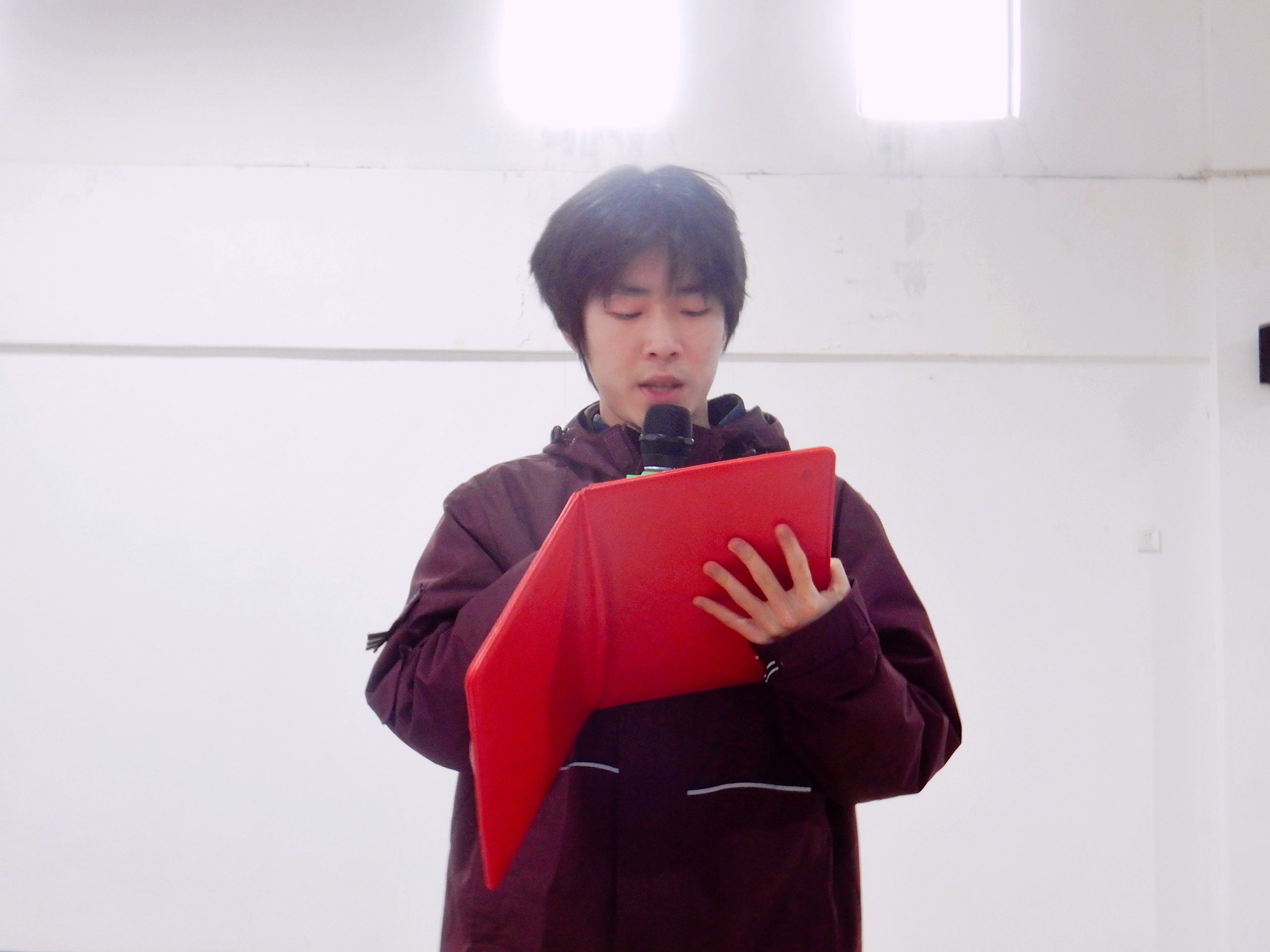
By Harry(李浩轩) from 2403
Dear teachers and fellow students,
Today I want to ask you a question: Is failure a better teacher than success? It sounds simple, but before we can answer it, we need to ask something more fundamental: What exactly is failure?
Think about this carefully. When a toddler falls down learning to walk, what do we call it? Growth. Learning. A normal part of being human. Nobody looks at that child and says, "What a failure."
But when an entrepreneur's business fails, when an artist's work is rejected, when a student gets a disappointing grade—what do we call it? Failure. Same action—trying and not succeeding—but completely different labels.
This is my point: Failure is not a fact. It does not exist in the world like a tree or a mountain. Failure is a human definition. It is a label we create based on our standards, our expectations, and the time we live in.
Consider Vincent van Gogh. In his entire lifetime, he sold only one painting. By the standards of his era, he was a failure—a nobody, a painter who could not make a living. But today? His paintings sell for tens of millions. He is considered one of the greatest artists who ever lived. What changed? His paintings never changed. The label changed. Society simply changed its mind.
If van Gogh had accepted the label his time gave him, if he had believed he was a failure, he would have stopped painting. And the world would have no Sunflowers, no Starry Night. All that beauty, lost, because someone accepted a label that others created.
This transforms how we think about whether failure is a better teacher than success.
If failure is an objective fact, then its only lesson is practical: "Fix what went wrong. Do better next time." That is useful, but limited. It keeps you playing the same game by the same rules.
But if failure is just a label, it teaches us something far deeper. It teaches us to question the label itself. It makes us ask: Who decided this was failure? Whose standards am I using? Do these standards even make sense for me?
Success rarely teaches this. Why? Because success means you played by the existing rules and won. Success tells you: "The rules are good. Keep playing." Failure invites you to step back and ask: "Are these rules even right? Should I be playing this game at all?"
Thomas Edison understood this. When people called his thousands of experiments failures, he said: "I have not failed. I have just found 10,000 ways that won't work." He refused their label. He redefined his own experience. That ability—to question definitions, to challenge labels—is one of the most powerful skills a person can develop. And failure teaches it better than success ever could.
Now, I am not saying success has no value. Success gives us confidence. It tells us when we are on the right track. It encourages us to keep going. Success is a good teacher.
But success has blind spots. It rarely builds resilience, because resilience comes from falling and getting back up. It rarely teaches deep humility, because humility comes from facing our limits. And it rarely makes us question the rules, because the rules worked in our favour.
Failure teaches all these things. Failure teaches us that we can fall and survive. It teaches us that we do not have all the answers. And it teaches us to think for ourselves.
J.K. Rowling was rejected by twelve publishers before one said yes. Twelve times someone read Harry Potter and said no. By industry standards, she was a failure. But she did not accept that label. If she had, millions of children would have grown up without that magic.
So when you face failure—and you will, we all do—ask yourself: Who defined this? Is this failure, or just someone's opinion? What if I called it learning instead? What if I called it data? What if I called it a necessary step on a longer journey?
Failure is a label. It is not a fact. It is not a final verdict. It is not the end of your story unless you let it be. And because it is just a label, it can be questioned. It can be rejected. It can be rewritten. You have that power.
Realising this does not make failure hurt less. When things go wrong, it still stings. But it sets you free. Free to learn on your own terms. Free to define your own journey. Free to decide who gets to write the story of your life.
Will you let others write it? Or will you pick up the pen yourself?
Thank you.